When one thinks of
survival knives, images of Rambo come to mind. Lets
look at those knives and see the pros and cons. I
will be focusing on single edge fixed blade knives
because of the safety and function factors that
should be addressed in a survival situation.
Most of these Survival
Knives are large, bowie style blades with
hollow handles and saws on the spines. Movies like
Rambo made them popular and mass production and a
cheap price keep them popular. But trust me, there is
a reason for the low price tag.
First lets look at the
handle construction. Hollow handles, for the most
part, are all fad and a huge "no no" in the survival
world. Don't get me wrong, there are 1 or 2 custom
makers that take
the time and use the right
materials to make these knives work well. I own a
one piece fixed blade hollow handle knife from Chris
Reeve Knives that I trust in the woods. There is no
weak point in the blade to handle transition to
fail. This is not so in cheap mass production
knives. Most are held together with a single nut or
rolled pin and they call it good. Trust me, they
will fail. Just take one on a camping trip and try
to build a shelter with one like I did. 10 chops and
that was all she wrote. So for the most part, unless
you have to have a hollow handle, lets stick to a
full tang with a comfortable, secure handle. You
wont be sorry. If you must have the hollow portion
go for the Chris Reeve knives.
Next the blade. Once
again double edge is a big danger in a survival
situation. You can't afford the risk in the woods. A
large blade can, and will, do everything a small blade
can do plus more. Survival requires a lot of
chopping, and large weight foreword blades with a
thick spine cut your work in half. That's why
machetes are a huge part of outdoor life in many
tribes around the world. The saw back spine on early
aviator knives were made for aircraft escape, and
found there way onto all outdoor knives mainly for
looks than for function. It has been my experience
that they don't work that well on wood, and its easy
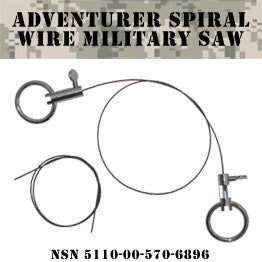
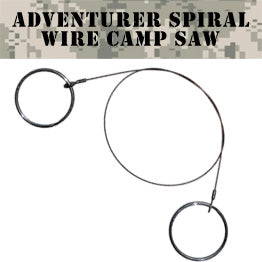
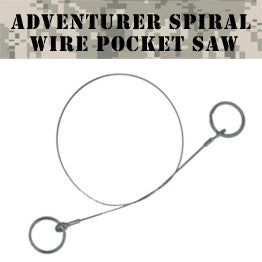
to pack a nice saw in a small survival kit. So if
you decide to stay with a small blade, you will have
a saw to make up for it.
Blade steel is best left
up to the person and situation. Air crew may want to
stick with the
Stainless versions that require less
maintenance. But on the other hand, they are harder
to sharpen in the field. I like a blade with a high
Carbon content. It takes more care and maintenance,
but the trade off for a scalpel sharp edge that's
easy to keep is worth it. In both cases it is best
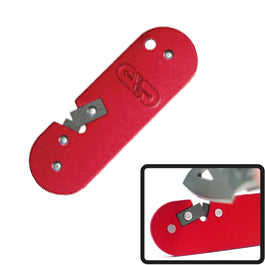
to learn to sharpen your blades and keep a sharpener
with it at all times. Do some homework and decide
for yourself what would be best for you.
As with any tool, you get
what you pay for. By no means do you have to pay
hundreds of dollars for a good knife, but a $5.00
Wally World blade won't last long under stress.
Remember your life is on the line. That being said,
lets look at the specs of a good survival knife.
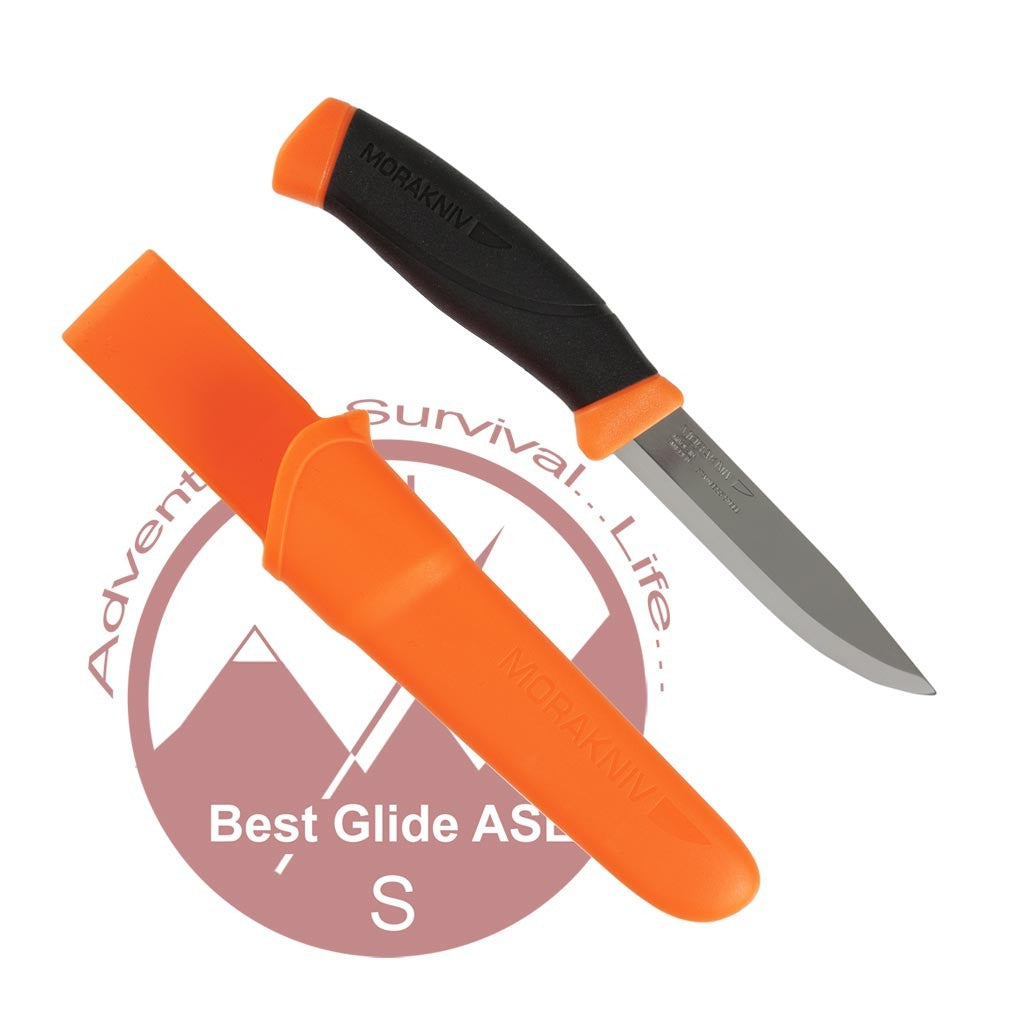
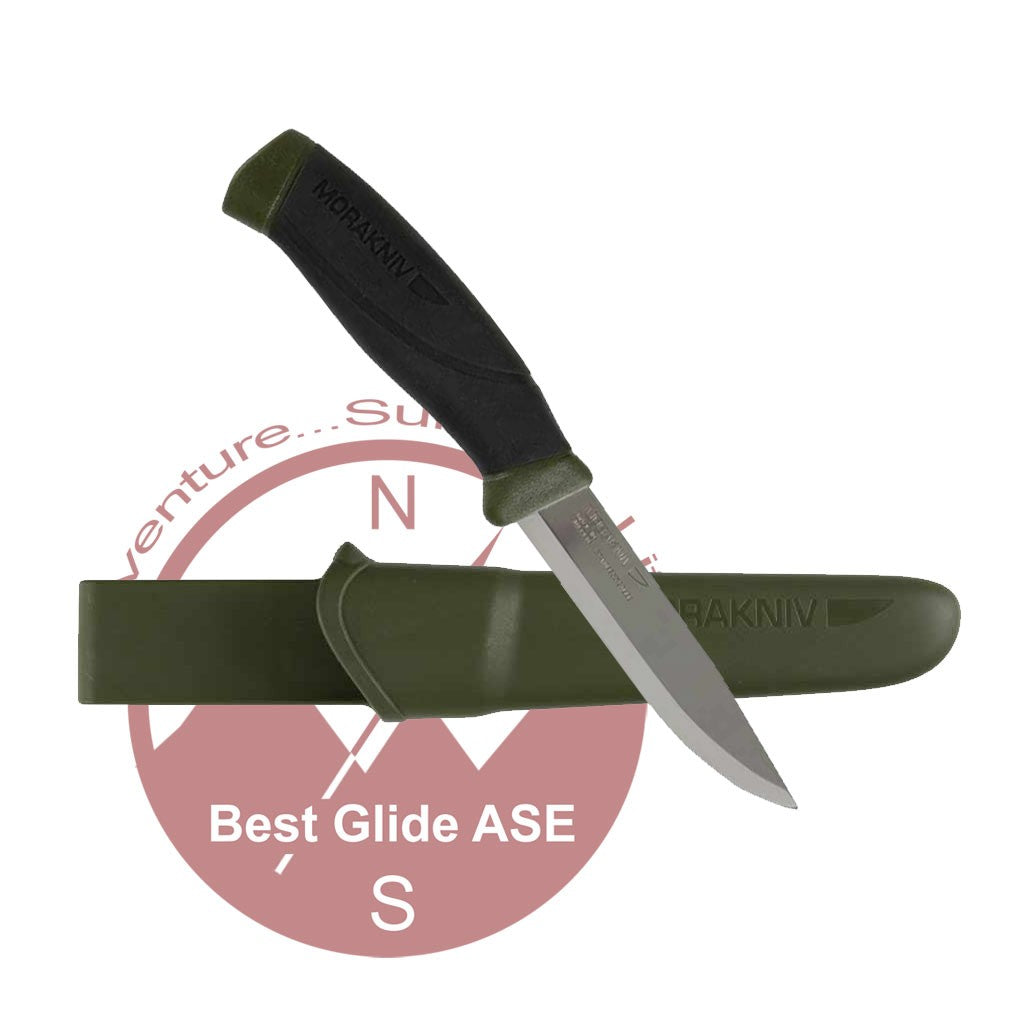
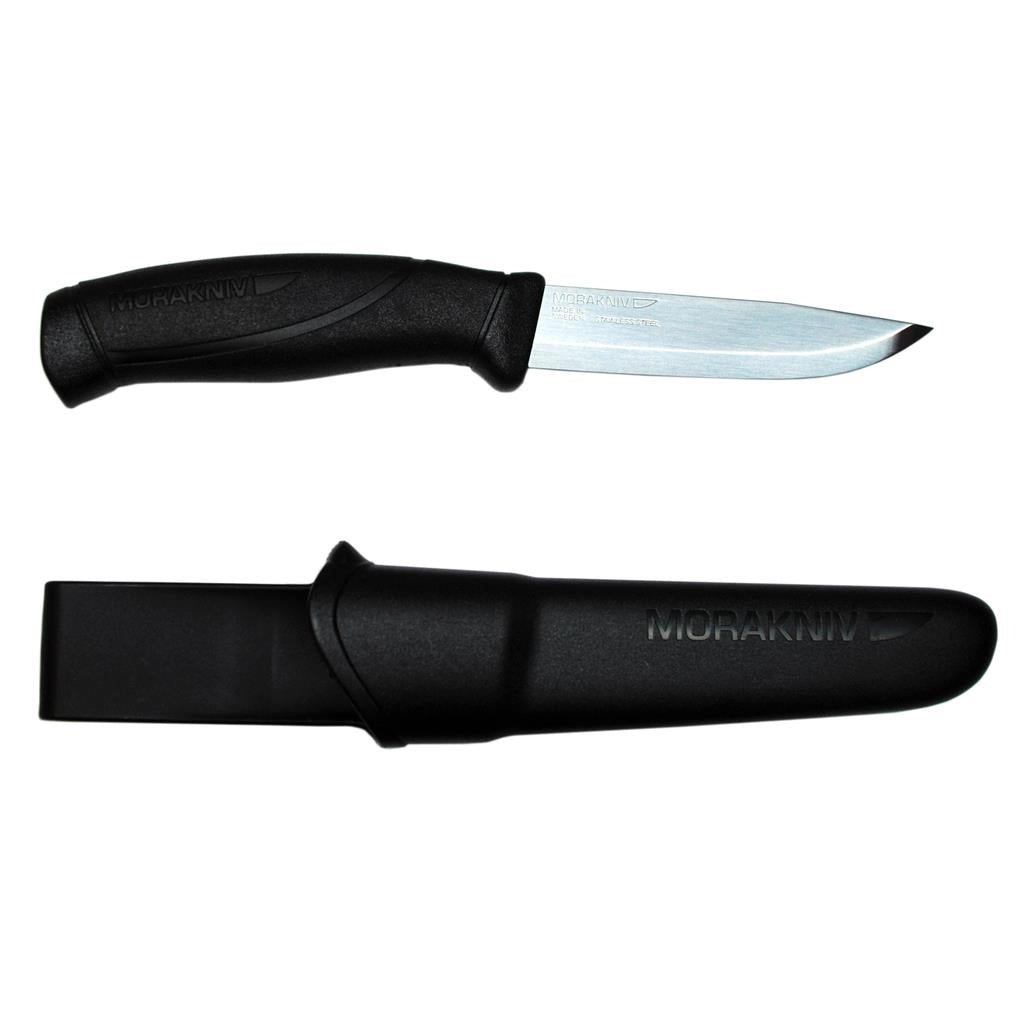
A quality survival knife has to feature high quality
construction with a reasonable price and time
tested
craftsmanship. Put that into a full tang knife with
a comfortable secure handle, along with a good sized
thick blade for chopping, with the right steel for
you and round it out with a usable sharpener and you've
got yourself a nice survival companion.
Now lets
put it in a package. Leather sheaths have been
around for a long time, and they work well. In many
cases it is better to find a sheath the fits
securely that is made of a strong webbing and lined
with a thick plastic or better yet Kydex insert.
This will help protect you and your knife for years
to come. They usually hold up well in all
conditions. Try to make sure is has a drain hole
so no water or dirt stays on the blade.
As a final thought,
when you decide on a survival knife, be sure and use
it. I have seen too many sit in kits or on shelves
and when the time comes for the survivor to use it,
they don't know how. Get in touch with your blade
until it becomes an extension of your arm. Safety is
the key in all things survival. With a little
preparation and practice, you will come to trust
your blade and yourself in any
situation.
Get out and survive.
Jimmie Foster
Jimmie Foster does not claim to be an expert. He is 30 with a wife and 3 kids with the 4th on the way. He has been a finish carpenter for 8 years
and spends much of his off time in the woods doing the things most are afraid of. He spends much of his time fishing, camping, and just enjoying the outdoor life.
He sees that every time he goes out into the woods, he uses at least 2 different skills he has learned, thus always keeps in practice. This is where he began his
Survival Preparedness self training. One thing led to another, and now he is learning to make his own knives and build his own survival kits. He went through a lot
of trial and error before he started to listen to others who have had even more experience than him. He states that "I'm no Rambo, but who could be, right?" Jimmie Foster lives in Arkansas.